Why Diabetic Retinopathy Should Never Be Ignored
For many patients living with diabetes, the focus is often on controlling blood sugar levels. However, one of the most serious complications lies beyond glucose control damage to the eyes. Diabetic retinopathy is one of the leading causes of vision loss, making regular eye monitoring a critical component of diabetes care.
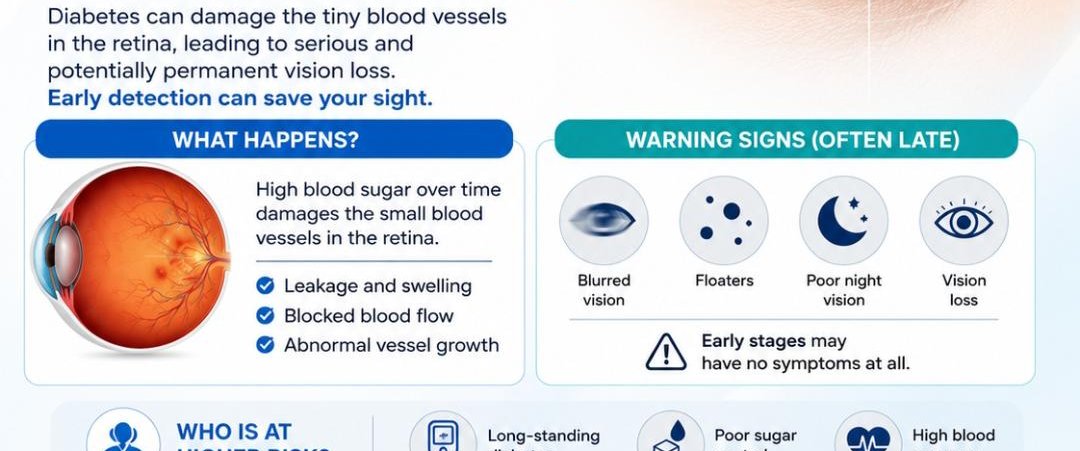
Patients with diabetes are at high risk of developing eye complications due to prolonged exposure to elevated blood sugar levels. Over time, this damages the small blood vessels in the retina, leading to leakage, swelling, or blockage.
Even in patients who feel well, retinal damage can silently progress. In early stages, symptoms may be absent, but as the condition advances, patients may experience blurred vision, floaters, poor night vision, or even permanent vision loss.
Persistent hyperglycemia, hypertension, and long duration of diabetes further accelerate retinal damage. In advanced stages, abnormal blood vessels may form, increasing the risk of bleeding and retinal detachment. Additionally, delayed diagnosis increases the likelihood of irreversible damage, making routine screening essential.
This is why regular eye examinations, strict blood sugar control, and proper blood pressure management are crucial in preventing disease progression.
Early detection allows for timely intervention, including laser therapy or targeted treatments, significantly reducing the risk of blindness.
Conclusion
Diabetes care should extend beyond blood sugar control alone. Protecting vision is a key part of long-term health.
At Telekidney, we emphasize early screening and preventive care because preserving eyesight is an essential part of managing diabetes.