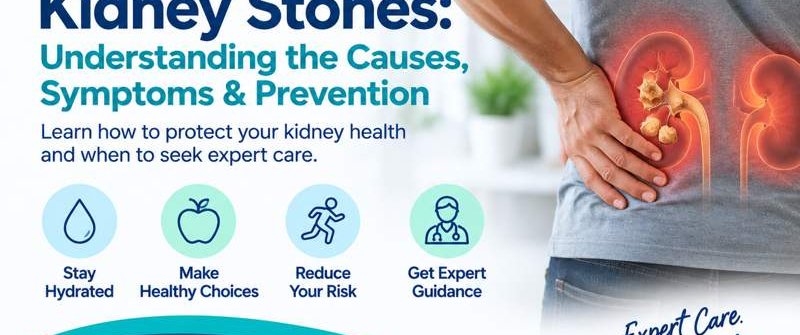
Understanding Kidney Stones: Causes, Symptoms, and When to Seek Care
Kidney stones are a common kidney condition that can cause sudden and severe discomfort. They develop when certain minerals and salts in the urine become concentrated and form hard deposits inside the kidneys.
While some kidney stones may pass naturally, others can cause significant pain, block urine flow or require medical treatment. Understanding the causes, warning signs and prevention strategies can help you protect your kidney health.
What Are Kidney Stones?
Kidney stones are hard, crystal-like deposits that form inside the kidneys when substances such as calcium, oxalate, uric acid or other minerals build up in the urine.
Small stones may move through the urinary tract without causing problems, but larger stones can become stuck and lead to pain, infection or complications.
Common Causes of Kidney Stones
Several factors can increase the risk of developing kidney stones, including:
1. Not Drinking Enough Fluids
Dehydration causes urine to become more concentrated, making it easier for minerals to stick together and form stones.
Staying properly hydrated helps dilute urine and supports healthy kidney function.
2. Diet and High Mineral Intake
Certain dietary patterns may increase the risk of kidney stones, including:
- High salt intake
- Excessive intake of certain animal proteins
- Not eating enough fruits and vegetables
- High intake of foods rich in oxalates for some individuals
A balanced diet can support kidney health and reduce risk.
3. Family History and Medical Conditions
Some people are more likely to develop kidney stones because of genetics or conditions that affect how the body processes minerals.
Conditions such as chronic kidney disease, gout, obesity and certain metabolic disorders may also increase risk.
Symptoms of Kidney Stones
Kidney stones can cause different symptoms depending on their size and location.
Common signs include:
- Severe pain in the side, back or lower abdomen
- Pain that comes and goes in waves
- Pain during urination
- Blood in the urine
- Nausea or vomiting
- Increased urgency to urinate
- Fever or chills, which may indicate infection
If you experience severe pain, fever or difficulty passing urine, seek medical attention promptly.
How Can You Reduce Your Risk?
Small daily habits can make a difference in protecting your kidney health:
Stay Hydrated
Drink enough fluids throughout the day unless your healthcare provider has advised you to limit fluids.
Reduce Excess Salt
High sodium intake can increase calcium levels in urine, which may contribute to stone formation.
Maintain a Balanced Diet
Eating a variety of healthy foods supports kidney function and overall health.
Follow Medical Advice
If you have previously had kidney stones or have kidney-related conditions, regular follow-up with your healthcare provider can help prevent future problems.
When Should You Talk to a Kidney Specialist?
You should consider speaking with a kidney specialist if you:
- Have repeated kidney stones
- Experience ongoing kidney-related symptoms
- Have risk factors such as diabetes or high blood pressure
- Need guidance on preventing future stones
At TeleKidney, our specialists provide convenient virtual kidney care, helping patients access expert guidance from the comfort of their homes.
Protect Your Kidney Health Today
Kidney stones can often be prevented with healthy habits, early awareness and proper medical guidance.
Your kidneys work every day to keep your body balanced. Taking small steps today can help protect your kidney health for the future.
📞 Schedule a virtual consultation: 567-525-3163
🌐 Learn more: https://telekidney.com/contact/
TeleKidney: Your partner in kidney health.