Understanding Estimated Glomerular Filtration Rate (eGFR)
Background
Health care providers use the eGFR test to understand damage to the kidney and the stage of kidney diseases. This measures the kidney’s ability to filter toxins from the blood. Any low index of toxins will indicate kidney diseases, hence the need for dialysis or kidney transplant.
Methods
This is done by estimating how the kidney works through a blood test for creatinine (or cystatin C). Kidneys have glomeruli, which are tiny blood vessels that function to remove toxins.
eGFR measures how well your kidney removes toxins in a minute. Health care providers use a formula to estimate eGFR. The calculation is based on different factors. They calculate your eGFR from the serum creatinine or cystatin C in your blood alongside factors like age, sex, weight, and height.
Creatinine Clearance Test (CCR)
Creatinine is a chemical compound. It is a leftover that a healthy kidney filters out of the blood. By doing a standard blood test for serum creatinine level, any rise in creatinine levels—leftovers from energy-making processes in muscles—may be a sign that the kidneys are not working as they are supposed to.
Results
Adults' normal eGFR is 100, and the lowest eGFR is 1. Healthcare providers may institute dialysis if your eGFR is below 60 for three months. eGFR decreases as you start to age.
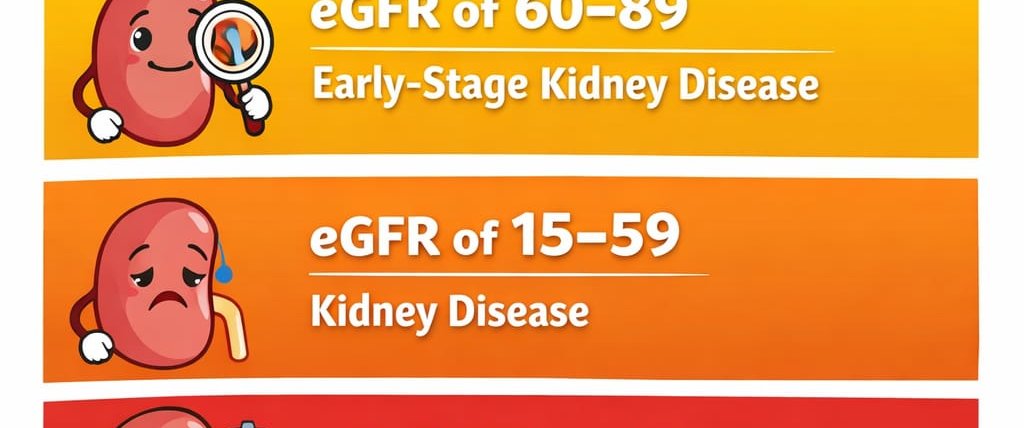
- eGFR of 90 or higher is in the normal range
- eGFR of 60–89 may mean early-stage kidney disease
- eGFR of 15–59 may mean kidney disease
- eGFR below 15 may mean kidney failure
Conclusion
Estimated glomerular filtration rate and creatinine clearance rate should be checked often. The results are triggers for you to start seeing a nephrologist. Watch for the signs and symptoms and take necessary steps to protect your kidney function.