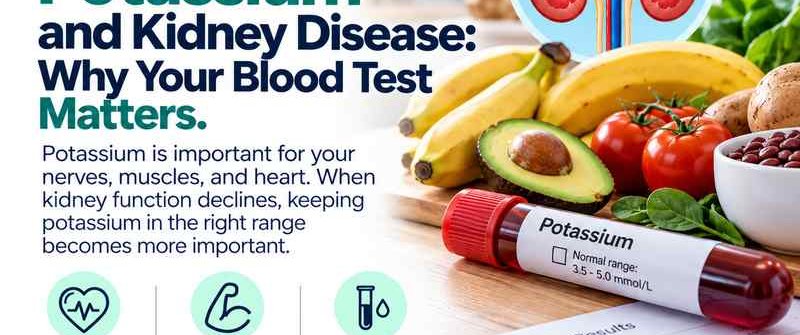
Potassium and Kidney Disease: Why Your Blood Test Matters
When you hear about kidney function, you may think about creatinine or eGFR. But kidney health involves much more than filtration.
Your kidneys also help maintain the right balance of minerals in your blood, including potassium.
Potassium is essential for normal nerve and muscle function, including the muscles that control your heartbeat. But having too much or too little potassium can cause serious problems. For people with chronic kidney disease (CKD), potassium levels may need to be monitored more closely because damaged kidneys may have difficulty removing enough potassium from the blood.
Why Do the Kidneys Control Potassium?
Potassium enters your body primarily through the foods and beverages you consume.
Healthy kidneys help remove excess potassium through urine, keeping the amount in your bloodstream within an appropriate range.
When kidney function decreases, the kidneys may become less effective at removing potassium. In some people with CKD, this can lead to hyperkalemia, the medical term for a potassium level that is too high.
Not everyone with CKD develops high potassium. The risk depends on kidney function, medications, other health conditions, diet and several other factors.
High Potassium May Not Cause Obvious Symptoms
One of the challenges with high potassium is that many people may have few or no symptoms.
When symptoms do occur, they can include:
- Muscle weakness
- Numbness or tingling
- Nausea
- Unusual tiredness
- Heart palpitations
Very high or rapidly increasing potassium can affect the heart and may become a medical emergency. Symptoms such as chest pain, significant shortness of breath or a fast or irregular heartbeat require immediate medical attention.
This is why you should not rely on how you feel to determine whether your potassium level is safe.
A blood test is used to measure potassium.
Why Your Medication List Matters
Food is only one part of potassium management.
Certain medications can increase potassium levels, particularly in people who already have reduced kidney function. Some dietary supplements and salt substitutes can also contain potassium or affect potassium balance.
This does not mean you should stop taking prescribed medication.
Instead, make sure your kidney care team knows about everything you take, including:
- Prescription medicines
- Over-the-counter medicines
- Vitamins
- Mineral supplements
- Herbal products
- Electrolyte products
- Salt substitutes
Your healthcare provider can determine whether any of these may affect your potassium level.
Should Everyone With Kidney Disease Avoid Bananas and Tomatoes?
No.
This is an important point.
You may have heard that people with kidney disease should avoid foods such as bananas, oranges, tomatoes, potatoes, or avocados because they contain potassium.
But not everyone with CKD needs to restrict potassium.
Potassium is an important nutrient and fruits and vegetables can be part of a healthy diet. Whether you need to limit particular foods depends on your blood potassium level, kidney function, medications and overall health. NIDDK recommends working with a healthcare professional or dietitian to determine the appropriate amount of potassium for you.
So don't remove healthy foods from your diet simply because you have been told that potassium can be a problem.
Your kidney diet should be individualized.
Be Careful With Salt Substitutes
If you are trying to reduce sodium, you may be tempted to replace regular salt with a salt substitute.
But some salt substitutes use potassium chloride instead of sodium chloride.
For someone who needs to control potassium, this can be an important consideration. NIDDK recommends checking labels and discussing salt substitutes with your healthcare professional if you have CKD or are at risk for high potassium.
A product marketed as a healthier alternative to salt is not necessarily appropriate for everyone with kidney disease.
What About Potassium Supplements?
Potassium supplements should not be taken simply because potassium is an important nutrient.
If your potassium is low, your healthcare provider can determine why and whether supplementation is appropriate.
If your potassium is already high, taking additional potassium could make the problem worse.
The safest approach is to discuss supplements with your healthcare team before adding them to your routine.
Potassium and Dialysis
People receiving dialysis may need particularly careful potassium management.
Potassium can build up between dialysis treatments when the kidneys are unable to remove enough of it. Diet, medications and dialysis treatment all play a role in maintaining an appropriate potassium level.
If you receive dialysis, follow the dietary and treatment recommendations provided by your kidney care team rather than relying on a general list of "good" and "bad" foods.
Your Potassium Number Is Only One Part of the Picture
A potassium result should not be interpreted in isolation.
Your healthcare team may consider your:
- Kidney function
- Potassium level
- Other electrolyte levels
- Blood pressure
- Medications
- Diabetes status
- Heart health
- Dialysis status
- Dietary intake
- Other laboratory results
This broader picture helps your care team determine whether a potassium result requires monitoring, dietary changes, medication adjustments or additional treatment.
NIDDK identifies hyperkalemia as one of the complications that may require monitoring as CKD progresses.
What Can You Do?
If you have CKD, there are several practical steps that can make potassium management safer:
Know your potassium level.
Ask your healthcare provider what your latest result means for you.
Review your medications.
Make sure your kidney care team has an up-to-date list of everything you take.
Don't make unnecessary dietary restrictions.
If your potassium is normal, you may not need to avoid potassium-rich foods.
Check food labels.
Look for potassium chloride and other potassium-containing additives when you have been advised to limit potassium.
Be cautious with supplements.
Discuss potassium-containing supplements and electrolyte products with your healthcare provider.
Follow your individualized care plan.
Your potassium needs may change as kidney function or medications change.
When Should You Seek Urgent Care?
High potassium can sometimes become dangerous without producing obvious warning signs.
If you have known or suspected high potassium and develop chest pain, severe shortness of breath, significant heart palpitations or other severe symptoms, seek emergency medical care.
Do not wait for your next routine appointment if you believe you may be experiencing a medical emergency.
Kidney Care Is About Balance
Managing kidney disease is not about simply avoiding every food or mineral that might affect your kidneys.
It is about finding the right balance for your individual health.
For some people with CKD, potassium needs to be limited. For others, it does not. The right approach depends on your laboratory results, kidney function, medications and other health conditions.
Understanding your potassium level can help you have more informed conversations with your healthcare team.
Connect With TeleKidney
Kidney care often involves ongoing questions about laboratory results, medications, nutrition and lifestyle.
TeleKidney provides virtual kidney care for eligible patients, allowing them to connect with kidney specialists without every consultation requiring an in-person visit.
If you have questions about your potassium level, kidney function, medications or nutrition, talk with your healthcare provider about what is appropriate for you.
TeleKidney
📞 567-525-3163
Virtual Care. Real Support.