How High Blood Pressure Damages Your Kidneys And How to Prevent It
High blood pressure, also known as hypertension, is often called a “silent killer” because it can damage important organs without causing noticeable symptoms. One of the organs most affected is the kidney.
Your kidneys work every day to remove waste and extra fluid from your blood. But when blood pressure remains high for a long time, it can quietly damage the tiny blood vessels inside the kidneys, reducing their ability to function properly.
Without early detection and treatment, this damage may progress to chronic kidney disease (CKD) or even kidney failure.
How High Blood Pressure Affects the Kidneys
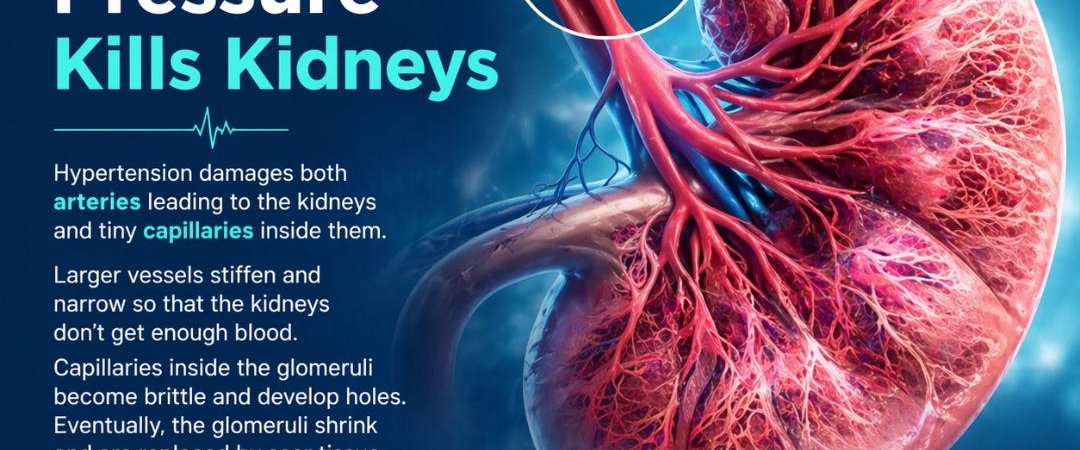
The kidneys contain tiny blood vessels that act as filters to clean the blood.
When blood pressure stays high:
- The blood vessels become narrow and stiff
- Blood flow to the kidneys decreases
- Kidney filters become damaged over time
As the damage continues, the kidneys lose their ability to remove waste effectively. This leads to a gradual decline in kidney function.
Warning Signs of Kidney Damage
Kidney damage caused by hypertension often develops slowly, and symptoms may not appear until the disease is advanced.
Possible warning signs include:
- Swelling in the feet, ankles, or face
- Frequent urination, especially at night
- Persistent fatigue
- Foamy urine
- Headaches
- Difficulty controlling blood pressure
Important:
Many people experience no symptoms at all in the early stages.
And who Is at Higher Risk?
- The risk of kidney damage is higher in people who have:
- Long-standing high blood pressure
- Diabetes
- A family history of kidney disease
- Obesity
- Smoking habits
- High salt intake
If you have one or more of these risk factors, regular kidney check-ups are important.
How to Protect Your Kidneys
The good news is that kidney damage from hypertension can often be prevented or slowed
- Control Your Blood Pressure
Take your medication as prescribed and monitor your blood pressure regularly.
2. Reduce Salt Intake
Too much salt raises blood pressure. Avoid processed foods and reduce added salt in meals.
3. Eat a Healthy Diet
Choose more fruits, vegetables, and fresh foods while reducing fatty and processed foods.
4. Stay Hydrated
Drink enough clean water unless your healthcare provider advises otherwise.
5. Avoid Harmful Medications
Frequent use of painkillers such as NSAIDs may worsen kidney damage.
6. Get Regular Check-ups
Simple urine and blood tests can detect kidney damage early.
When Should You See a Healthcare Provider?
- You should seek medical advice if:
- You have high blood pressure
- You have diabetes
- You notice swelling or changes in urine
- Your blood pressure remains difficult to control
Early treatment can prevent serious kidney complications.
Final Thoughts
High blood pressure does not only affect the heart it can silently damage the kidneys over time.
The best protection is early detection, regular monitoring and proper blood pressure control.
If you are living with hypertension, consider getting your kidneys checked. Early action can protect your kidney health for years to come.